
How Mindfulness Rewires and Heals the Brain Through Neuroplasticity for Calm and Focus

Updated: Sep 14
As a licensed psychotherapist, I strive to practice what I preach! Mindfulness has been a significant part of my life. It has greatly contributed to healing my own brain and my lifelong habit of anxiety. I practice mindfulness daily in various areas of my life. Please take a few minutes to read this to the end and consider if being more mindful may help you as it has helped me and countless others.
The brain is not as fixed as people once thought. It is less like a carved statue and more like a living trail system. The paths we use often become clearer, while the paths we ignore get overgrown. Mindfulness is one way to choose which trails the brain practices walking.
That sounds poetic, but it is also biological. Each time we return our attention to the breath, notice tension without immediately reacting, or see a thought as just a thought, the brain gets a small training rep. It’s not a dramatic movie montage rep, sadly. More like brushing your teeth—quiet, repeatable, and surprisingly powerful over time.
Research suggests that mindfulness practices can shape areas of the brain involved in attention, emotional regulation, stress response, and self-awareness. Studies using brain imaging have linked regular mindfulness practice with changes in the prefrontal cortex, the brain’s “pause and choose” system, and the amygdala, the alarm system that reacts to threats. Those changes may help explain why mindfulness often leads to more calm, better focus, and a little less “why did I walk into this room?” energy.
This article is informational and not medical advice. Mindfulness can support mental health, but it is not a substitute for care from a qualified professional when symptoms are severe, persistent, or unsafe.

Neuroplasticity: The Brain’s Ability to Change
Neuroplasticity is the brain’s capacity to reorganize itself based on experience, learning, behavior, and environment. It happens when neurons strengthen or weaken their connections, when networks become more efficient, and when the brain adapts after repeated use. It's important to remember that neuroplasticity is not inherently good or bad. The brain can change in positive ways, like becoming more calm and regulated. The same is true for negative emotions. We can also develop neural circuits that gravitate toward anxiety, depression, anger, or traumatic reactions.
A simple example is learning to play the piano. At first, every note feels like a separate task. Your fingers, ears, eyes, and attention all seem to be in a committee meeting with no agenda. After practice, the movements become smoother. Brain networks that support motor control, sound processing, memory, and timing become better coordinated.
Mindfulness works in a similar way, though the “instrument” is attention. When the brain senses that our attention is in the present moment, it is not in the past, where we experience depression, anger, resentments, regrets, and other negative emotions. It is also not in the future, where we often find anxiety. When the brain senses that we are in the present moment, we are safe! When the brain senses safety, it dials down depression, anxiety, anger, frustration, and other negative emotions. On a side note, it also dials down chronic pain!
When practicing mindfulness, the brain repeatedly performs skills such as:
Noticing where attention is
Returning attention to a chosen anchor (usually the breath)
Sensing the body from the inside
Observing thoughts without immediately following them
Allowing emotions to rise and pass
Responding instead of reacting
These skills are not abstract. They use real neural circuits. Remember, these are actual neural pathways: electrochemical communication in the brain! With repetition, those circuits may change. Take just a minute to think about that! We are literally making positive changes to the structure and functioning of the brain! How cool is that!!! What's even more amazing (to me anyway!) is that this can result in significant changes in as little as eight weeks!
The Brain Changes Through Repetition and Relevance
The brain tends to reinforce what it practices. If the mind spends all day rehearsing worry, threat scanning, and self-criticism, those patterns can become easier to trigger. That does not mean worry is a personal failure. It means the nervous system is trainable, for better or worse.
Mindfulness gives the brain another pattern to rehearse.
Instead of instantly fusing with a thought like “I’m going to mess this up,” mindfulness allows a tiny gap. The thought appears. The body reacts. Then awareness notices both. That gap may feel small, but it is a major event for the brain. It creates room for regulation.
Over time, the brain may become more skilled at shifting out of automatic stress loops. This is where mindfulness living becomes practical. It is not about floating through the grocery store in perfect peace while someone blocks the cereal aisle. It is about noticing the irritation before it drives the bus.
Mindfulness is Mental Training, Not Mental Blankness
One common myth says mindfulness means clearing the mind. This is a biological impossibility! It just can't happen! Anyone who has sat quietly for thirty seconds knows the mind has other plans. It may bring up an old conversation, tomorrow’s schedule, a random song lyric, and the urgent question of whether penguins have knees. Our brain is constantly working, 24 hours a day!
Mindfulness is not the absence of thought. It is the practice of changing the relationship to thought.
A mindful moment has three basic parts:
Attention
Notice what is happening now.
Awareness
Recognize thoughts, emotions, and sensations as experiences, not facts that must be obeyed. THIS IS A CRITICAL POINT! When I have a thought that "I'm the worst therapist that has ever lived!", that is a thought, and that's all! It takes time to help our brain understand that a thought is just that, A THOUGHT, and nothing more. The next time you have a thought about being defective, or "less than", or just not good enough, stop right then and there! Label it as a thought, just a thought, and nothing more. You can even say to yourself "wow! that's interesting! I just had a thought that ........".
Nonjudgment
Meet the moment with curiosity rather than instant criticism. An appropriate thought might be "Wow! That's interesting that I had that thought. I wonder why!".
That last part matters. If the mind wanders during meditation, that is not failure. The “rep” happens when awareness notices the wandering and gently returns. This is also a critical point, and distinguishes whether this is helpful or harmful! When your mind wanders and you notice that this has happened, just tell yourself that your brain is doing exactly what God created it to do. All of us have wandering minds, and it's perfectly normal. When you pay attention to the breath and find your mind wandering, just very gently notice it and just as gently return your focus to the breath. This tells the brain that all is safe and activates the neural pathway that says "This is how we focus in the present moment". When we very gently, and without judgment, bring our focus back to the breath, we activate a literal pathway in the prefrontal cortex. Each time this pathway is activated, it becomes stronger, and moves more toward default.
Meditation Trains Steady Attention
Meditation is one of the best-known mindfulness practices. A common version is breath awareness meditation.
Here is a simple example:
Sit comfortably.
Let the eyes close or soften.
Notice the breath moving in and out.
When the mind wanders, name it softly as “thinking.”
Return to the next breath.
The breath is not magic. It is just convenient. It is always happening, requires no subscription, and does not judge your technique.
In brain terms, this practice asks attention networks to stay with a chosen object. It also asks self-awareness networks to notice distraction. Each return to the breath is a moment of cognitive control, supported in part by the prefrontal cortex.
Breathing Exercises Calm the Stress Response
Breathing practices overlap with mindfulness, especially when attention stays with the physical feeling of breathing.
One useful technique is slow exhale breathing:
Inhale gently through the nose for about four counts.
Exhale slowly for about six counts.
Repeat for two to five minutes.
Keep the breath comfortable, not forced.
Longer exhales can support the parasympathetic nervous system, which helps the body shift toward rest and recovery. This does not mean breathing fixes every problem. It means the breath can send the body a signal that says, “We are not being chased by a bear right this second.”
A longer exhale also gives the mind something concrete to follow. That can be useful during stress when thoughts become loud and the body feels stirred up.
Body Scans Build Awareness of Early Warning Signs
A body scan involves moving attention through the body, one area at a time. The goal is not to relax every muscle on command, although relaxation may happen. The goal is to notice.
For example:
Feet touching the floor
Legs resting on the chair
Belly moving with the breath
Shoulders lifting or tightening
Jaw clenching
Face softening
This practice can reveal early signs of stress before they become full emotional weather systems. Tight shoulders, shallow breathing, or a clenched jaw may appear before a person consciously realizes they feel anxious or angry.
That awareness gives the brain more time to regulate.

Mindfulness Changes Brain Regions Linked to Calm and Focus
Brain imaging research does not say that every person who meditates will have the same brain changes. People differ. Practices differ. Study designs differ. Still, a growing body of research suggests that mindfulness training may influence several brain regions and networks involved in attention, emotion, and stress.
The findings often point to a core pattern: mindfulness appears to strengthen areas involved in regulation and awareness while reducing overactivity or stress-related changes in areas involved in fear and threat detection.
These findings line up with what many people report after regular practice. They may still feel stress, but they notice it sooner. They may still get distracted, but they return more easily. They may still have anxious thoughts, but the thoughts feel less like emergency instructions.
The Prefrontal Cortex Helps the Brain Pause and Choose
The prefrontal cortex sits behind the forehead and plays a key role in attention, decision-making, impulse control, and emotional regulation. It helps evaluate situations, plan responses, and inhibit automatic reactions.
When stress runs high, prefrontal control can weaken. That is why a person may snap, freeze, panic-scroll, or eat cereal for dinner straight from the box. No judgment. The brain under stress loves shortcuts.
Mindfulness practice appears to support prefrontal function by repeatedly training attention and regulation. Some MRI studies have found greater cortical thickness or gray matter concentration in prefrontal areas among experienced meditators, and some studies of mindfulness-based programs have reported changes after weeks of training.
What does that mean in daily life?
A stronger or more engaged prefrontal cortex may support:
Better focus during demanding tasks
More flexible thinking
Less impulsive responding
Improved emotional balance
Greater ability to return attention after distraction
The practical result is not perfect serenity. It is more “I can notice what is happening and choose my next move.”
The Amygdala is the Brain’s Alarm System
The amygdala helps detect threats and activate the stress response. It is fast, protective, and not especially interested in nuance. If the amygdala were a smoke alarm, it would sometimes go off because someone made toast.
Research suggests that mindfulness training can reduce amygdala reactivity to emotional stress. Some studies have also found decreases in amygdala gray matter density after structured mindfulness programs, especially when perceived stress goes down.
This matters because a highly reactive amygdala can make ordinary challenges feel urgent or unsafe. Emails, conflict, traffic, health worries, money stress, or social tension can all trigger the body’s alarm system.
Mindfulness may help by changing how quickly and intensely that alarm fires. It may also improve communication between the prefrontal cortex and amygdala, allowing the thinking brain to help regulate the threat system.
The result can feel like calmness, but not because the world becomes calm. The nervous system becomes less likely to treat every inconvenience like a five-alarm fire.
Mindfulness does not remove stress from life. It changes how the brain detects, interprets, and recovers from stress.
The Default Mode Network is Where the Mind Wanders
The default mode network becomes active when the mind drifts into self-focused thought. It is involved in memory, future planning, identity, and internal storytelling. This is the part of the brain that says "I just know I will fail that test" or "I know I will likely be passed over for the promotion". Our thoughts in the DMN are normally self-referencing, and often, though not always, negative.
This network is useful. Without it, planning dinner or remembering a birthday would be harder. The trouble starts when it gets stuck in rumination.
Rumination is repetitive thinking, often about what went wrong, what might go wrong, or what that one person meant by “interesting.” Mindfulness practice has been linked with reduced activity in default mode regions during meditation and improved awareness of mind wandering.
That helps explain why mindfulness can support focus. The mind still wanders, but the wandering becomes more visible (and usually less frequent). Once visible, it is easier to return to the task at hand.

Research Connects Mindfulness with Better Mental Health
Mindfulness is not a cure-all, and it does not work the same way for everyone. Still, research has found encouraging links between mindfulness-based practices and mental health.
Structured programs such as mindfulness-based stress reduction and mindfulness-based cognitive therapy have been studied in many settings. I often recommend Palouse Mindfulness to my clients as a good starting point. This is a well-structured, and FREE 8-week training for mindfulness-based stress reduction. Findings suggest these programs can help reduce stress, anxiety, depressive symptoms, and relapse risk for some people with recurrent depression. Mindfulness is also used as part of treatment approaches for trauma, substance use, eating concerns, and stress-related conditions, usually alongside professional care. I usually integrate mindfulness into all of my work!
The strongest effects often come from regular practice and good guidance. A one-time meditation can feel relaxing, but lasting change usually requires repetition. The brain enjoys consistency. It is annoyingly reasonable that way.
Mindfulness Can Reduce Anxiety and Stress
Anxiety often pulls attention into the future. The mind rehearses what could happen, what might go wrong, and how to prevent every possible disaster. Mindfulness brings attention back to what is happening now.
That shift can reduce the fuel for anxious loops. During mindfulness practice, sensations, thoughts, and emotions are noticed as passing events. A thought like “I can’t handle this” can be labeled as a thought, not accepted as a fact.
Research suggests mindfulness may reduce perceived stress and anxiety by improving emotional regulation and body awareness. Better awareness helps people notice stress earlier. Better regulation helps them respond with more skill.
Mindfulness May Support Depression Recovery
Depression often involves rumination, self-criticism, low energy, and a painful sense of being stuck. Mindfulness-based cognitive therapy was developed to help people relate differently to depressive thoughts, especially patterns that can trigger relapse.
Instead of arguing with every negative thought, mindfulness teaches recognition. “This is a depressive thought pattern” can become more useful than “Why am I thinking this again?” That recognition creates space.
Studies suggest mindfulness-based cognitive therapy can reduce relapse risk for some people with recurrent depression, especially when practiced consistently and taught by trained professionals.
Mindfulness Can Help with Emotion Regulation
Emotions are body events as much as mental events. Anger has heat, pressure, and energy. Fear has tightness, speed, and scanning. Sadness has heaviness or ache. Mindfulness teaches people to observe those signals without immediately acting them out or pushing them away. In the mindfulness community, we say "pain + resistance equals suffering" and "pain + acceptance equals relief".
This can increase emotional tolerance. The brain learns, through experience, that strong feelings can rise, peak, and pass.
That lesson is powerful. It can reduce avoidance, impulsive reactions, and the fear of emotion itself.
Mindfulness Can Improve Cognitive Function
Focus is not just willpower. It depends on attention networks, working memory, emotional state, sleep, stress levels, and environment. Mindfulness helps by training attention directly and reducing some of the stress noise that competes for mental resources.
Research has linked mindfulness practice with improvements in attention, working memory, cognitive flexibility, and executive function. Results vary, but the trend is promising.
Attention Gets Stronger Through Returning
During meditation, attention wanders. Then awareness notices. Then attention returns.
That cycle is the workout.
Each return strengthens the skill of noticing distraction without getting lost in it. Over time, this can support sustained attention. That helps with reading, listening, studying, parenting, driving, and finishing a task without opening twelve unrelated tabs.
Working Memory May Benefit from Lower Stress
Working memory is the ability to hold and use information in the mind for short periods. Stress can interfere with it. That is why it becomes harder to remember details under pressure.
Mindfulness may help working memory by reducing stress reactivity and strengthening present-moment attention. When the brain spends less energy managing threat signals, it has more capacity for the task in front of it.
Mindfulness May Change the Experience of Chronic Pain
Pain is not “all in the head,” and mindfulness does not mean pretending pain is fine. Pain is real. It involves the body, brain, emotions, attention, and meaning.
Mindfulness-based approaches have been studied for chronic pain and may help some people reduce pain-related distress, improve coping, and change their relationship to unpleasant sensations. The pain signal may still exist, but the suffering around it can sometimes shift.
A simple way to understand this is the difference between sensation and story.
Sensation: “There is tightness and burning in my lower back.”
Story: “This will never improve, and I can’t handle it.”
Mindfulness does not deny the sensation. It helps the brain notice when the story adds fear, tension, and helplessness. For some people, that change can improve quality of life.
The relationship between neuroplasticity, prefrontal cortex, amygdala, calming, relaxing, focus, chronic pain, and mindfulness is still being studied, but the direction is clear enough to be useful: repeated awareness can change how the brain processes stress, attention, and discomfort.
A Simple Daily Practice Can Start the Rewiring Process
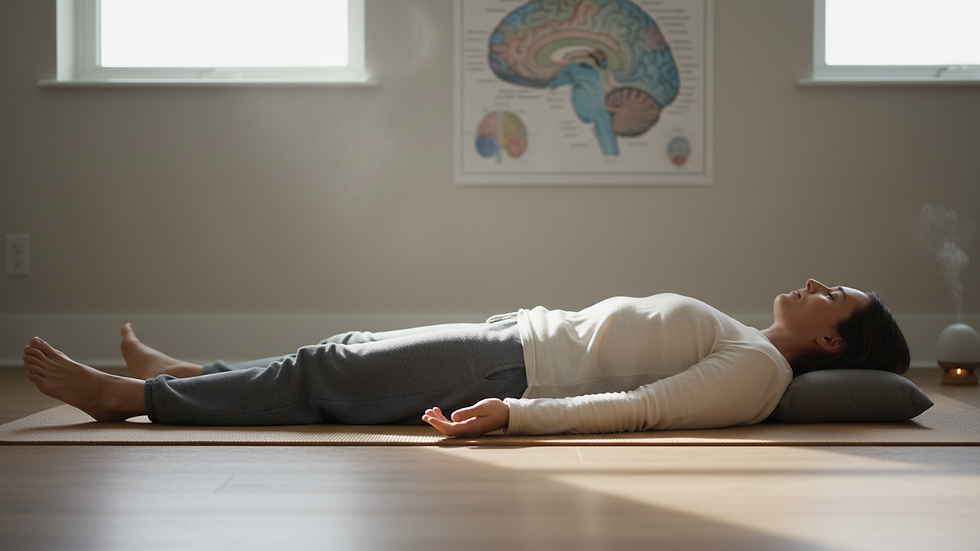
The brain changes through practice, not through reading about practice while nodding wisely. Reading helps, but the nervous system prefers experience.
A daily mindfulness routine does not need to be long. Five minutes can be enough to begin. The key is consistency and kindness. Do not turn mindfulness into one more way to criticize yourself. The brain does not learn calm through harsh internal coaching.
Try the Five-Minute Breath Practice
Use this when you need a simple starting point.
Set a timer for five minutes
Choose a quiet enough place. Perfect silence is optional and often mythical.
Feel the body supported
Notice the chair, floor, cushion, or bed holding you.
Find the breath
Pay attention to the belly, chest, or nostrils.
Name wandering gently
When thoughts pull attention away, silently say “thinking” or “wandering.”
Return to one breath
Come back to the next inhale or exhale. You only need to return now, not forever.
Close with one body cue
Notice the face, shoulders, hands, or belly before moving on.
This practice trains attention, awareness, and self-regulation in a compact way.
Use Box Breathing When Stress Spikes
Box breathing is structured and easy to remember.
Inhale for four counts.
Hold gently for four counts.
Exhale for four counts.
Hold gently for four counts.
Repeat for one to three minutes.
If breath holds feel uncomfortable, skip them. Try a four-count inhale and six-count exhale instead. Mindfulness should not feel like a lung exam.
Practice Mindful Walking
Mindful walking works well for people who dislike sitting still. It also proves that mindfulness does not require candles, bells, or a personality transplant.
Try this:
Walk slowly for a minute or two.
Feel each foot lift, move, and land.
Notice the contact with the ground.
Let the eyes take in color, light, and shape.
When thoughts wander, return to the feet.
This practice builds sensory awareness and attention while the body moves. It can be especially helpful during restlessness or agitation.
Add Mindfulness to Ordinary Routines
The easiest practice is the one attached to something already happening.
Try one mindful minute during:
Morning coffee
Showering (my favorite!)
Brushing teeth
Washing dishes
Waiting in line
Sitting in the car before going inside
Eating your favorite meal
Getting into bed
The mind may complain that one minute is too small to matter. The brain disagrees. Small, repeated signals shape nervous system patterns. Remember! Frequency is more important than Duration! Several small mindfulness events are more effective than one long meditation session!
Make Mindfulness Easier to Keep
A new practice lasts longer when it feels realistic. The goal is not to become a flawless meditator. The goal is to become someone who returns and recovers attention.
Start Smaller Than Your Ambition
Many people start with twenty minutes a day, miss two days, and decide they have failed. A better approach is almost laughably small.
Try two minutes daily for one week.
If that feels too easy, good. Easy is how habits survive busy days, low motivation, and surprise errands. Once the practice exists, it can grow.
MOMENTUM IS MORE IMPORTANT THAN MOTIVATION!
Expect Boredom, Distraction, and Resistance
Boredom is common. So is irritation. So is the sudden belief that reorganizing the spice cabinet is urgent.
Another common reaction is the tendency to feel like you are drifting off to sleep. While this is a common reaction, it is not the ultimate goal of mindfulness.
These reactions do not mean mindfulness is not working. They are part of seeing the mind clearly.
When resistance appears, try naming it:
“Planning”
“Judging”
“Restless”
“Tired”
“Worried”
Naming creates distance. Distance creates choice.
Pair Practice with Compassion
Mindfulness without compassion can become rigid. Compassion softens the practice. It reminds the nervous system that awareness is not surveillance.
A simple phrase can help:
“May I meet this moment with patience.”
Or, if that feels too polished:
“Let’s not make this worse.”
Both count.
When Mindfulness Needs Extra Support
Mindfulness is usually safe and helpful, but some people find that quiet attention brings up distressing memories, panic, grief, or trauma sensations. If that happens, it is wise to slow down, keep the eyes open, focus on grounding objects, or work with a trained therapist.
Support matters. Mindfulness can be part of healing, but it should feel steady enough to practice. For people dealing with trauma, intense anxiety, depression, or ongoing distress, guided care can make the process safer and more effective. I usually integrate mindfulness into all trauma therapy, as this helps stabilize the nervous system.
If you are looking for trauma-informed support that respects both the brain and the nervous system, you can learn more about therapy options at Hope Renewed EMDR.
Frequently Asked Questions
How Long Does Mindfulness Take to Change the Brain?
Some studies find measurable brain or behavior changes after several weeks of regular practice, especially in structured programs. Day-to-day benefits, such as feeling calmer after breathing, may happen sooner. Lasting change usually comes from steady repetition.
Do I Have to Meditate Every Day?
Daily practice helps because neuroplasticity responds to repetition. That said, missing a day does not erase progress. A realistic practice you return to is better than an intense plan you abandon. Even two or three minutes a day is more effective than one hour once a week.
Can Mindfulness Stop Anxiety?
Mindfulness may reduce anxiety and improve coping, but it does not guarantee anxiety will disappear. It helps many people relate differently to anxious thoughts and body sensations. Severe or persistent anxiety deserves support from a mental health professional.
Is Mindfulness the Same as Relaxation?
Not exactly. Relaxation can be a side effect, but mindfulness is awareness of the present moment. Sometimes that feels relaxing. Other times it means noticing discomfort with more steadiness.
What is the Best Mindfulness Technique for Beginners?
Breath awareness is a good starting point because it is simple and portable. Body scans and mindful walking are also beginner-friendly, especially for people who feel restless during seated meditation.

A Calmer Brain is Built One Rep at a Time
Mindfulness changes the brain because the brain changes through experience. Each mindful breath, each noticed thought, and each pause before reacting gives the nervous system new information. Over time, those small moments can strengthen attention, support the prefrontal cortex, quiet amygdala reactivity, and improve the way the brain handles stress.
The practice does not need to be dramatic. It needs to be repeatable.
Start with one minute today. Feel one breath. Notice one sensation. Return once without scolding yourself. That is the basic move. Repeat it often enough, and the brain begins to learn a different way to meet the world.
If I can be of any help in your mindfulness journey, please feel free to contact me. I will be happy to help in any way possible.



Comments