
Can At-Home Neurofeedback Devices Help Relieve Chronic Pain?

Pain is not “all in your head,” but the brain is deeply involved in how pain signals are noticed, amplified, calmed, and remembered. That is why some people with long-term pain are getting curious about at-home brain-training tools.
At-home neurofeedback devices promise something appealing: a way to practice calming or retraining brain activity from the couch, often with a headband, sensors, and an app. For people who have tried medication, physical therapy, injections, diet changes, meditation, or counseling with mixed results, the idea can sound hopeful.
The honest answer is more measured. These devices may help some people reduce pain intensity, stress reactivity, sleep problems, and the sense of being stuck in a pain loop. The research is promising, especially for clinic-based treatment, but at-home devices are still an emerging option. They are best viewed as a supportive tool, not a stand-alone cure.
This article is for education only and is not medical advice. Anyone considering a new treatment for pain should talk with a qualified health professional, especially if symptoms are severe, changing, or tied to another medical condition.
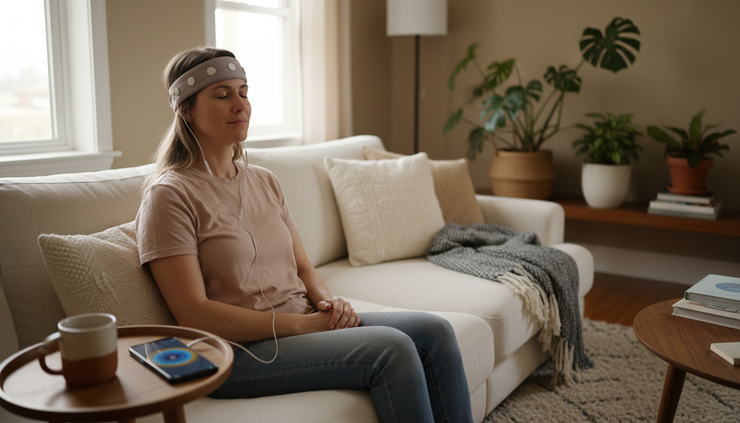
How at-home neurofeedback devices work
Neurofeedback is a form of biofeedback. Instead of tracking heart rate, muscle tension, or skin temperature, it tracks brain activity, most often through EEG sensors placed on the scalp.
EEG stands for electroencephalography. It measures electrical patterns produced by groups of brain cells. These patterns are often described as brain waves, such as:
Delta
Often linked with deep sleep
Theta
Often linked with drowsiness, emotional processing, or a deeply relaxed state
Alpha
Often linked with calm alertness
Beta
Often linked with focus, thinking, and mental effort
Sensorimotor rhythm
Often linked with body stillness and relaxed attention
A typical at-home session looks simple. A person puts on a headband or sensors, opens an app, and listens to sound or watches a visual display. When the brain produces the target pattern, the app gives positive feedback. That feedback might be music that becomes smoother, a video that gets brighter, or a game that moves forward.
Over time, the goal is learning. The brain starts to recognize which states receive rewards and may become better at returning to those states.
For pain, the target is not usually “turn off pain.” It is more often:
Reducing over-arousal in the nervous system
Improving sleep quality
Supporting emotional regulation
Changing attention to pain signals
Helping the brain spend less time in threat mode
That last point matters. Long-term pain can make the nervous system more sensitive. Researchers often call this central sensitization. It means the brain and spinal cord may process signals as more intense, even when tissue damage is not increasing. This can happen in conditions such as chronic pain, fibromyalgia, migraines, irritable bowel syndrome, gut issues, and other complex symptom patterns.
Why brain training might affect pain
Pain involves the body, but it also involves the brain networks that handle attention, emotion, memory, body awareness, and safety. If the brain sees the body as under threat, pain can feel louder. If the nervous system feels safer and more regulated, pain may become less intense or less disruptive.
This does not mean pain is imaginary. It means pain is a protective output of the nervous system, and that system can sometimes be trained.
Researchers have found links between chronic pain and changes in brain rhythms, especially in areas involved in sensory processing and emotional regulation. Some studies have observed altered alpha, theta, and beta activity in people with ongoing pain. Neurofeedback aims to gently guide those patterns toward more flexible regulation.
The most realistic goal is not perfect pain control. It is better nervous system regulation, which may reduce pain intensity and improve daily functioning for some people.
That distinction is important. A person might still have symptoms, but notice they recover faster after a flare, sleep better, feel less alarmed by pain, or need fewer rescue strategies during the day.

What the research says so far
The strongest research on brain-based feedback for pain has usually taken place in clinics or labs, not with consumer devices at home. That matters because clinical systems often use more sensors, trained providers, and individualized protocols.
Still, the broader evidence gives useful clues.
A well-known area of research involves EEG biofeedback for conditions such as fibromyalgia and migraine. Small clinical studies have reported improvements in pain, fatigue, sleep, anxiety, or quality of life after a series of sessions. For example, research by Kayiran and colleagues on EEG biofeedback in fibromyalgia reported symptom improvements in participants receiving brain-based training. Other studies and reviews have described potential benefits for headache disorders, though methods and results vary.
Researchers including Mark Jensen and colleagues have also studied neurofeedback and related brain-training methods for neuropathic pain, including pain after spinal cord injury. Their work has helped support the idea that training brain rhythms may influence pain perception in some people.
Systematic reviews tend to land on a cautious middle ground. They often describe neurofeedback for pain as promising but not yet proven enough to be a first-line treatment. Common concerns include:
Small study sizes
Different training protocols across studies
Limited long-term follow-up
Difficulty using strong placebo controls
Variation in provider skill and device quality
That does not mean the approach is useless. It means the evidence is still developing.
The American Psychological Association and many pain specialists recognize biofeedback as a useful tool for some pain-related conditions, especially when stress, muscle tension, headaches, or nervous system arousal play a role. EEG-based training is a more specialized branch of that wider field.
What makes at-home devices different from clinic-based care
At-home devices are more accessible, but they are not the same as working with a trained clinician.
Clinic-based neurofeedback may include:
A brain map or detailed EEG assessment
Custom protocols based on symptoms and brain patterns
Multiple sensor placements
Live adjustment by a provider
Integration with therapy, pain education, or relaxation skills
At-home devices usually offer:
Fewer sensors
App-guided sessions
Preset training programs
Lower cost than full clinical treatment
More convenience and privacy
That convenience can be meaningful. Pain already takes time and energy. A home tool that fits into a 10- to 20-minute routine may be easier to keep using than appointments across town.
The tradeoff is precision. Consumer headbands can be affected by poor sensor contact, hair, movement, jaw tension, blinking, or app interpretation. Some devices also market themselves for wellness, sleep, meditation, or focus rather than medical pain treatment.
Before buying, it helps to ask:
What to check | Why it matters |
Does the device measure EEG or a different signal? | Some products sound brain-based but mainly track relaxation or heart rate. |
Is it FDA-cleared for any purpose? | Clearance is not the same as proof for pain relief, but it gives context. |
Can a clinician review the data? | Guidance may reduce frustration and misuse. |
What claims does the company make? | Be wary of guaranteed pain relief or cure language. |
What is the refund policy? | Pain results vary, and the device may not fit everyone. |
Potential benefits people report
At-home users often describe benefits that go beyond pain scores. In forums, product reviews, clinician case reports, and personal testimonials, common themes include:
Feeling less reactive during a flare
Falling asleep more easily
Feeling calmer after sessions
Having fewer stress-triggered headaches
Noticing pain without panicking as quickly
Building a daily routine that feels active and hopeful
These experiences make sense. Chronic pain can create a loop: pain raises stress, stress tightens the body, poor sleep lowers tolerance, and the next day’s pain feels worse. A calming daily practice may interrupt part of that loop.
Some people describe subtle gains rather than dramatic changes. For example, a person with migraine might not stop having attacks, but may notice less anticipatory anxiety. Someone with fibromyalgia may still have widespread pain, but may sleep more deeply after several weeks of consistent practice. A person with pelvic pain or IBS-related discomfort may find that nervous system training helps them feel safer in their body.
Testimonials can be encouraging, but they are not the same as research. People who improve are more likely to post about it. People who feel no change may quietly stop using the device. Pain also fluctuates naturally, which can make it hard to know what caused improvement.
The most useful way to approach user stories is with curiosity, not certainty.

Limitations and concerns to keep in mind
At-home brain training is generally low risk for many people, but it is not risk-free and not right for everyone.
Some users report temporary side effects such as:
Headache
Fatigue
Irritability
Dizziness
Sleep changes
Feeling overstimulated
These effects may happen when sessions are too long, protocols are not a good fit, or someone pushes through discomfort. More is not always better.
People with seizure disorders, serious psychiatric symptoms, recent brain injury, or complex neurological conditions should be especially careful and seek professional guidance before using EEG-based training.
There are also practical concerns.
Cost can add up. Some devices require subscriptions. Some work best when paired with coaching. A cheaper device that sits unused is still expensive.
Apps may oversimplify pain. Pain is shaped by sleep, movement, inflammation, emotions, trauma history, medications, social stress, diet, and medical conditions. A brain-training device cannot address all of that.
Marketing can outrun evidence. A product may use impressive scientific language while relying on studies that were done with different equipment or trained clinicians.
Data privacy matters. Brain and health-related data can be sensitive. Read the privacy policy before sharing information through an app.
Results take time. Many clinical protocols use repeated sessions over weeks or months. Trying a device twice and quitting may not be enough, but using it daily for months with no benefit may not make sense either.
A reasonable trial might include a clear plan. Track pain, sleep, mood, flare frequency, medication use, and function for a few weeks before starting. Then use the device consistently for a set period. Look for patterns that matter in real life, such as walking longer, sleeping better, or recovering faster after stress.
How to use at-home neurofeedback wisely
The best results usually come when brain training is part of a broader pain plan. It may work better alongside care that addresses the body, mind, and nervous system together.
Useful pairings can include:
Medical evaluation and medication review
Physical therapy or gentle movement
Sleep support
Nutrition care when relevant
Psychotherapy for stress, trauma, or pain-related fear
Mindfulness, breathing, or relaxation training
Pacing strategies for activity and rest
If trauma, anxiety, or long-term stress seem tied to pain flares, therapy may be especially helpful. Treatments such as EMDR, somatic approaches, cognitive behavioral therapy for pain, and pain reprocessing therapy all aim to change how the nervous system responds to threat.
For support with nervous system healing and trauma-informed care, visit Hope Renewed EMDR.

The takeaway on at-home brain training for pain
At-home neurofeedback devices are not magic, and they are not backed by enough evidence to replace medical care. They also should not be sold as a guaranteed treatment for pain.
Still, they may offer real value for some people. The strongest case is not that they erase pain directly. It is that they may help train the nervous system toward calmer, more flexible patterns. For a person whose pain flares with stress, poor sleep, sensory overload, or emotional strain, that can matter.
A smart approach is to stay hopeful and careful at the same time. Choose devices with realistic claims. Track changes. Start slowly. Involve a clinician when possible. Most of all, judge success by daily life, not only by a number on a pain scale.
If a tool helps sleep improve, flares soften, or the body feel a little safer, that is meaningful progress.


Comments